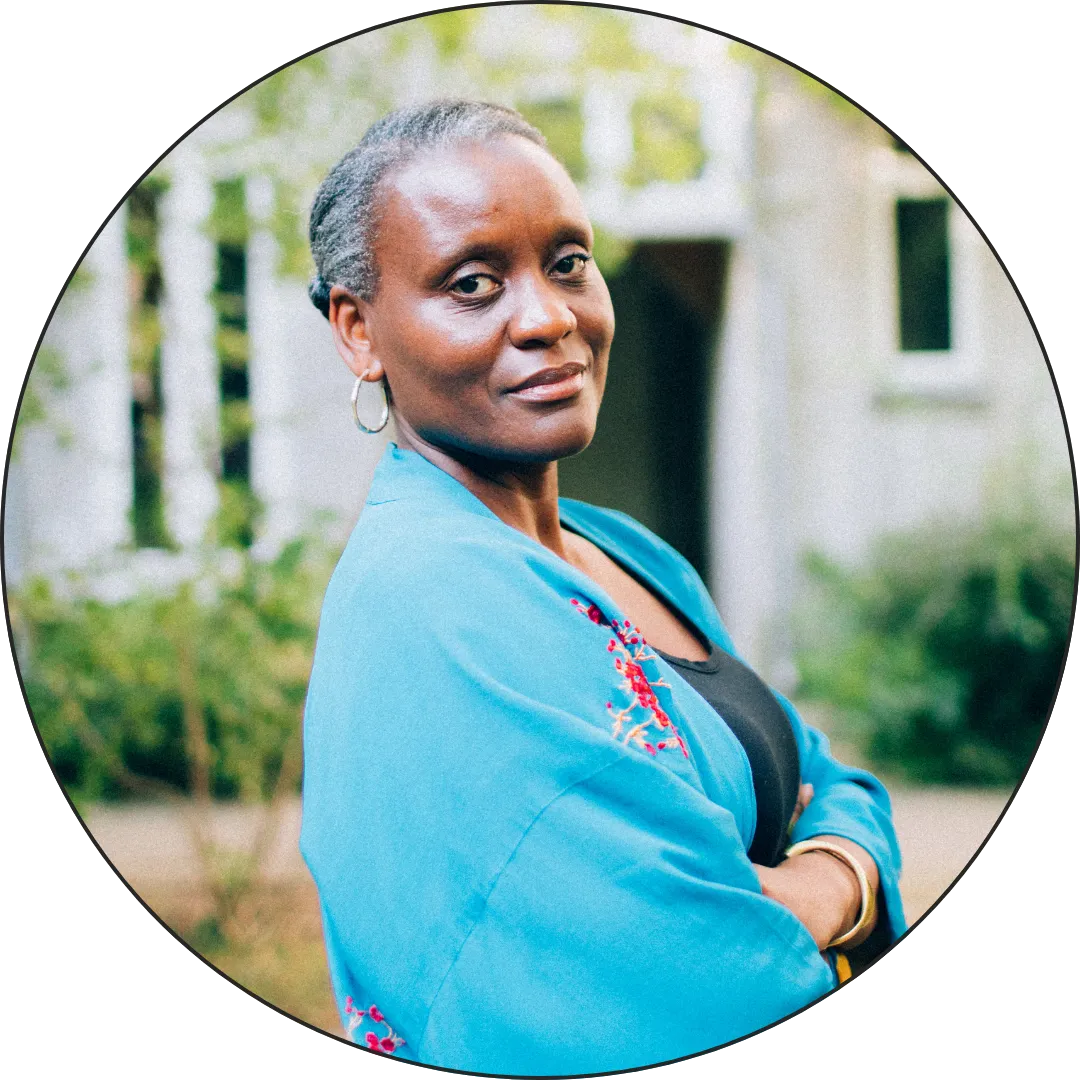

Therapy for Black Women Who are Ready to Come Home to Themselves.
Are you a Black woman looking for culturally competent therapy? Have you felt misunderstood or not seen in therapy? Do you long to live and thrive in your skin as everything that you are? And, are you ready to take charge of defining who you are and who you can be?
You Might Be Here Because...
🙋🏾♀️ You no longer feel fully connected to yourself. Perhaps you know how to take care of everyone else, but struggle to know what you need, what you feel, or even who you are beneath the roles you have learned to play.
🙋🏽♀️ Your relationships feel difficult, confusing, or exhausting. You may find yourself repeating the same patterns, struggling to communicate what you need, carrying other people's emotions, or longing for deeper and more fulfilling connections.
🙋🏿♀️You are tired of second-guessing yourself. The voice that tells you you're not enough may have become so familiar that trusting your own decisions, instincts, and desires feels harder than it it should.
🙋🏾♀️ You know something needs to change, but you don't yet know how to move forward. Maybe you feel disconnected from your power, depleted by life's hardships, or ready to find a way of living that feels more free and more fully yours.
If so, you’re not alone. And there is another way.
Imagine if...
✴ You could hear your own voice more clearly, you knew what you felt, what you needed, and who you were above and beyond the expectations, roles, and identities you have learned to taken on.
✴ You could trust yourself more. If, despite still not having all the answers, you no longer needed constant reassurance that your thoughts, choices and desires were valid.
✴ Your relationships felt less draining and more nourishing. You could communicate more honestly, have difficult conversations, set boundaries, and remain connected to yourself while also being connected to others.
✴ You felt more at home in your own life. More connected to your strength, your vulnerability, your roots, and the parts of yourself you may have had to silence, abandon, or leave behind.




What if therapy could feel like being deeply seen and understood?
You don't have to spend your therapy sessions explaining your culture, your identity, or why certain things hurt.
With Yema, you can bring your whole self into the room. The parts of you shaped by our family, your culture, your history, your relationships, your experience of migration, your experiences as a Black woman - as well as the parts of yourself you don't quite understand yet.
This is therapy that goes beyond symptoms. Together, we explore the deeper patterns beneath what you're experiencing, make sense of what has happened to you, and create space for you to hear your own voice more clearly. You won't be reduced to a diagnosis or asked to fit into someone else's framework. You'll be met with curiosity, honesty, depth and compassion. You'll be supported to become more fully yourself.
THAT IS WHY I SPECIFICALLY OFFER
THERAPY FOR BLACK WOMEN
Because you deserve a space where you don't have to translate yourself to be understood.

You shouldn't have to spend your therapy sessions explaining why race matters, why family and cultural expectations can be complicated, or why being a Black woman can mean carrying so much while still being expected to hold everything together.
As a Black and African woman myself, I bring both professional expertise and lived experience and understanding to the work. I understand that your inner world doesn't exist separately from your culture, your history, your relationships, your body, your family or the world around you.
This doesn't mean I assume I know your story. It means we have a shared starting point and the freedom to go deeper. You can come as you are, speak your truth, and explore what becomes possible when you no longer have to make yourself smaller, more acceptable or easier to understand.
My approach is integrative and grounded in existential, humanistic and psychodynamic psychotherapy. I also draw on Pan-African, womanist, and African spiritual perspectives, allowing us to explore not only your individual experience, but the cultural, historical, and spiritual dimensions of your life. Together, these perspectives create a therapeutic space that is both deeply personal and expansive, providing psychological depth while making room for the whole of who you are.
✴ WHAT WE MIGHT WORK ON ✴
When you've lost touch with yourself
You may know how to show up for everyone else, but feel disconnecte from your own needs, desires and sense of direction. We can work together to understand what has pulled you away from yourself and begin the process of bringing you home to who you are.
The weight of family, culture & history
Sometimes what you're carrying didn't begin with you. Family expectations, cultural messages, religion, racism, colonial histories and intergenerational patterns can shape how you see yourself and the choices you feel able to make. We can explore these influences without reducing you to them.
Relationships that make you question yourself
Whether it's romantic relationships, family, friendships or work, you may find yourself over-giving, people-pleasing, struggling to set boundaries or repeatedly entering dynamics that drain you. Therapy can help you understand these patterns and develop relationships that feel more mutual, honest, and nourishing.
The parts of yourself you've had to silence
Perhaps you've learned to be strong, capable, agreeable or resilient - even when something inside you is saying this isn't working anymore. Together, we can make space for the anger, the grief, desire, and vulnerability. We can work on developing your capacity to reclaim and express the parts of you that are suppressed.
Becoming the woman you actually want to be
Therapy isn't only about fixing what hurts. It can also be about asking bigger questions like, who am I when I stop living according to everyone else's expectations? What do I want? What do I believe? And what would it mean to build a life that genuinely feels like mine? Therapy can be about building the courage not only to ask these questions but to let the answers move you to action.
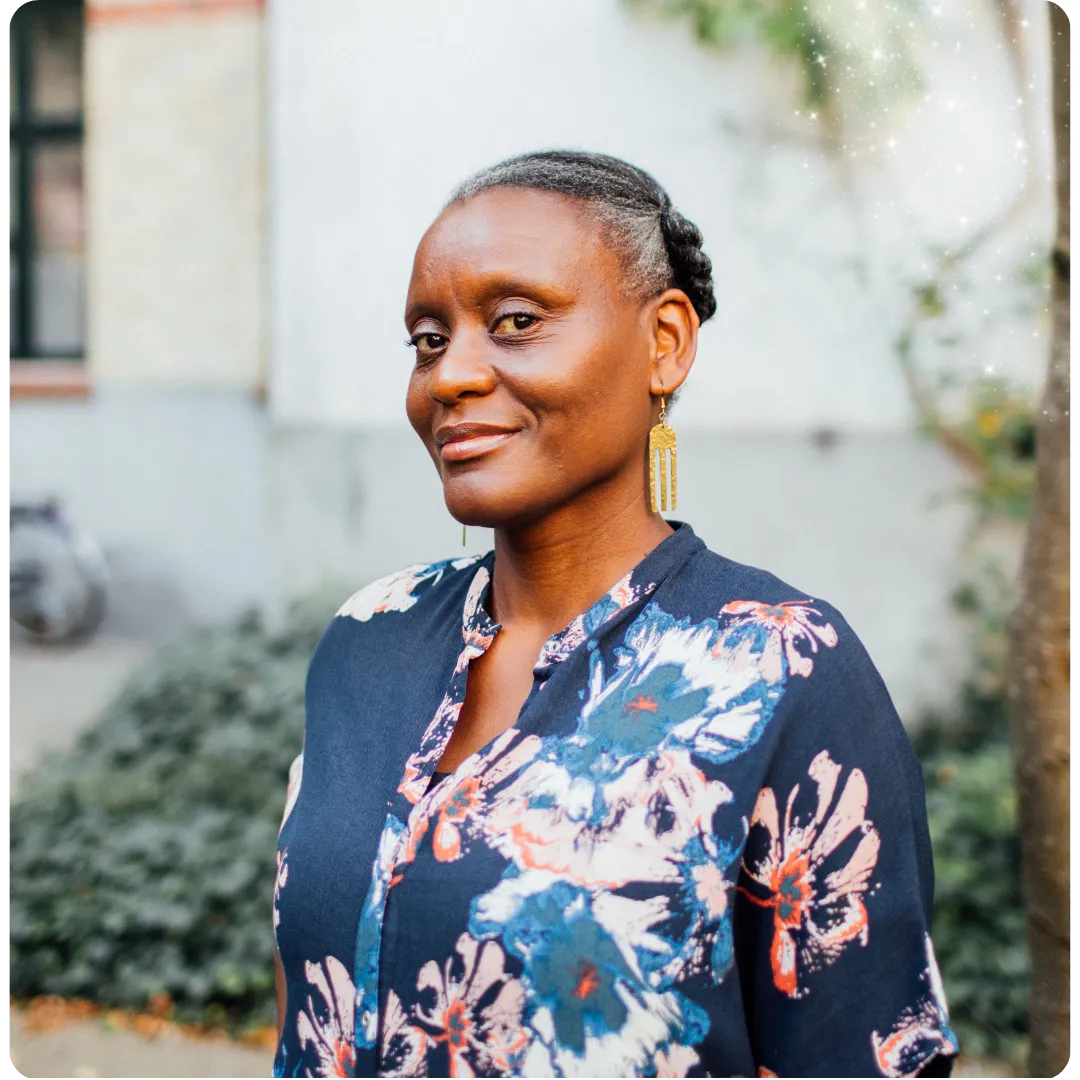
Hi, I'm Yema
I’m an Angolan psychotherapist based in Copenhagen, and I’ve been working with Black women since 2016. My own journey across cultures, psychology, psychotherapy, Black consciousness and African spirituality has shaped the way I understand healing and meet the women in my therapy room.
Early in my career, I worked with women recovering from domestic and sexual violence, trauma and migration. Over the years, my work has deepened into questions of identity, generational patterns, and how the systems we live in impact our wellbeing.
My training is grounded in existential, humanistic and psychodynamic approaches, with Pan-African, womanist and African spiritual perspectives now being central to my work.
But perhaps the most important thing to know about working with me is that I will not ask you to leave parts of yourself at the door. You can bring the fullness of your experience as it is and I will meet you where you are. I will also challenge you when there is something worth looking at more closely. We will work at a pace that respects you, without being afraid to go deep.
INSVESTMENT IN YOUR WELLBEING
1200 DKK per session (60 minutes)
Your first step is a free 30-minute call where we can get a sense of what you're looking for and whether working together feels like a good fit. There is no obligation to continue.
From The Women I've Worked With
Hear from the women who have experienced this work for themselves
〝
During my journey with Yema, I went through very difficult moments, big moments of realization, and very happy moments. I realized that for the first time in therapy, I was able to speak about the full spectrum of my experience without having to focus only on specific elements.
S. C., Stockholm
〝
I felt less overwhelmed because I started to accept who I was and understand myself better instead of trying to be who I wasn't. I leaned on the parts of me I saw as different or negative and allowed them to be my superpower. I always left having discovered so much about myself and, with each session, I grew to love myself.
M.N., Copenhagen
〝
The biggest change I've noticed as a result of working with Yema, is how I hold space for my rage and how I can now self-soothe and hold space for myself without too much criticism or judgment. I loved the way we worked on what comes up every session without the urgency to figure it all out then and there.
A.A., Brussels
Psychotherapist, PGDip, MPF
Professionally trained. Ethically accountable.
I am a qualified psychotherapist and a member of the Danish Psychotherapist Association (Dansk Psykoterapeutforening), where I am bound by its ethical framework. I hold a Postgraduate Diploma in Integrative Psychotherapy and Counselling from Regents University London and a Bachelor's degree in Psychology from Temple University.
FAQs
Who do you work with?
I primarily work with Black women and women of African descent who are navigating questions of identity, relationships, belonging, trauma, life transitions, racism, or simply feeling disconnected from themselves. Other people of color sometimes reach out to me because my approach makes sense to them and they are very welcome.
You don't need to be in crisis to come to therapy. If something in your life no longer feels right and you want support in making sense of it, that is reason enough.
Do I need to be experiencing a specific problem to come to therapy?
Not at all. You might be struggling with anxiety, depression, burnout, relationships or a particular life transition. Or you may simply have a sense that something needs to change, without being quite sure what. Therapy can be a space to slow down, understand what's happening beneath the surface, and get clearer on what you want.
Do you work specifically with Black women?
Yes. Black women are at the heart of my practice. this means you don't have to spend your sessions explaining the cultural, racial or social context of your experiences before we can begin exploring their impact in your life.
At the same time, I don't assume that being Black means we share the same experience. But, being culturally literate and having lived experience of what it's like to be Black in this world, positions me to be able to easily understand your experience.
Do I have to talk about race, culture or trauma?
No. We follow what feels meaningful and relevant to you. Race, culture, family, migration, spirituality and trauma may be important parts of your story, but you are never required to talk about anything before you're ready or that isn't relevant to you. We work at a pace that respects you while still allowing us to go deep.
What if I've tried therapy before and it didn't help?
You're not alone. Sometimes therapy doesn't work because the approach wasn't right, the relationship wasn't the right fit, or you didn;t feel fully seen or understood. If you've had that experience, we can talk about it openly. Finding the right therapist is part of the process and you should feel that there is room for your whole self in the work.
Can I use my doctors referral with you (Denmark)?
No. Your doctor's referral does not cover sessions with a psychotherapist at this point. The Danish Psychotherapist Association is working on making this possible but it is not yet a reality. If you have any private insurance you can check with them to see if they cover psychotherapists.
How long does therapy last?
There is no fixed answer. Some people come with a specific issue they want to work through over a few weeks or months, others want longer-term therapy for deeper exploration and personal growth. We'll consider what you need and review it together as the work progresses.
What if I become dependent on therapy and unable to live without it?
Therapy is not meant to become something you cannot live without. The goal is not to make you dependent on the therapist, but to help you develop a stronger relationship with yourself so that, over time, you can better trust your own capacity to navigate life, make decisions and hold space for yourself through difficult moments.
How do I know if you're the right therapist for me?
You can't always know from a website. the therapeutic relationship matters, and sometimes you need to experience the space to know whether it feels right. If something here resonates with you, I invite you to book a call so we can talk and see how it feels.
How do I book a session?
You can book a call by using the Book a Call button on this page. We'll have an initial conversation about what brings you to therapy, what you hope to get from it, and whether it feels like we might be a good fit. You can also ask me any questions you have before deciding whether you'd like to begin.